How Alleles Work
You may be wondering, what are alleles, and how do they relate to either the coronavirus or Noah’s Ark? I’m glad you asked! One of the main criticisms of the biblical account of the Great Deluge is the inclusion of only two of every kind, the rest of which were destroyed by the waters of the flood. The question is, how could all of the variety we see in nature arise from only two of each kind of animal found on the ark? What about insects, birds, trees, and sea animals? Since they weren’t on the ark, how could they possibly have survived?
In this article, I’ll talk specifically about this problem of only two of every kind, and how alleles make it possible for all of the variety we see in nature’s animals (and humans) to come from only a few pairs of animals and humans on the ark.
Alleles are the part of the gene that codes for physical characteristics. For example, when you think of your eye color, it’s an allele that controls that. My mother has hazel eyes, and my dad has blue eyes. I have blue eyes. But if one looked carefully at my eyes and compared their color to that of my father, they’d see that mine are a slightly different shade of blue than his. But if his gene was dominant, how did that happen?
It happens because alleles have a built-in ability to exhibit variations somewhere in between the two parent genes. For example, the petals of a flower generated from mixing a red-pedaled flower with a white-pedaled flower may produce pink petals, white petals, red petals, or several variations in between. So if we’re looking at a red flower, a white flower, and a pink flower, we may naturally expect that they all must have come from different parents. Yet this is not necessarily the case.
Another good example of this is dog breeds. Look at any dog litter, and you’ll see several different variations of skin color within the pups. One may have slightly longer hair than another. Another might have a slightly shorter snout. Yet they all came from the same litter. This is made possible by – you guessed it – alleles! It’s not just that they have different genes (because each egg carries a slightly different set of alleles from the mother and each sperm cell carries a slightly different set of alleles from the father), it’s how the alleles interact with each other to create brand new alleles in the child’s own DNA.
Mutation Vs. Variation
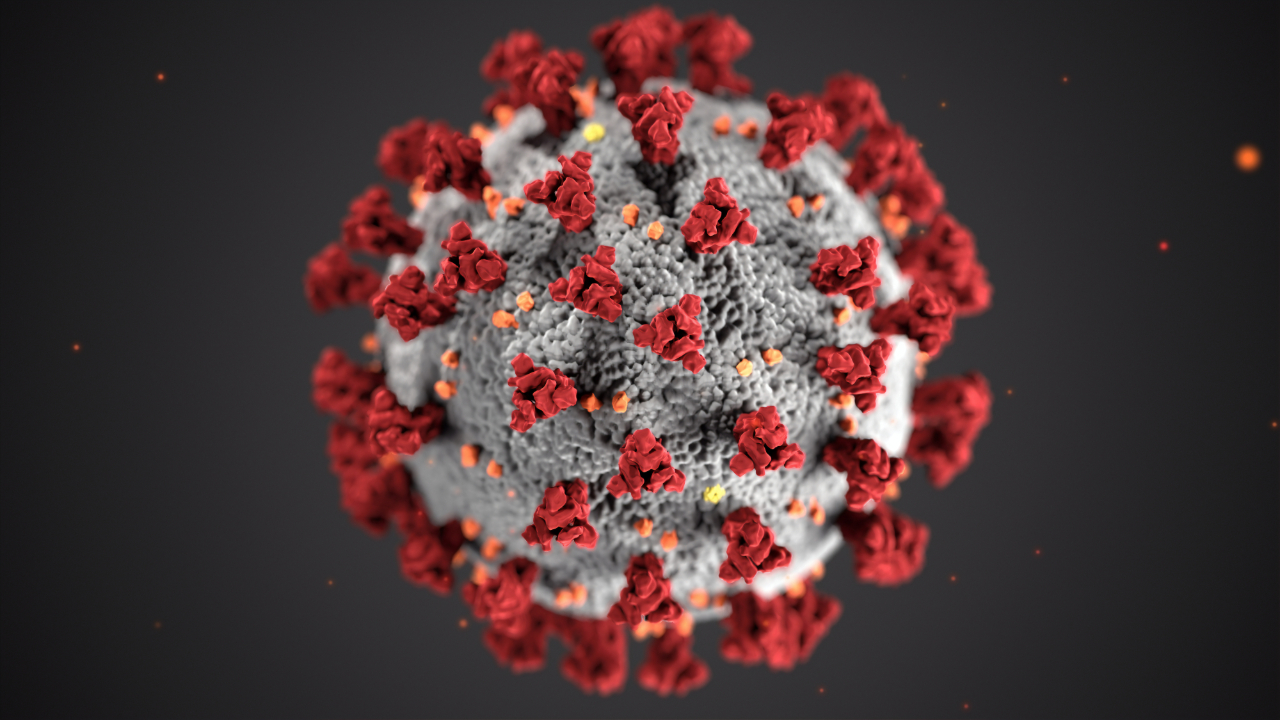
We see this in the variations within the latest coronavirus. In another article, I mentioned that all of the coronavirus “siblings” (of the SARS-COV-2 virus) have 1%-2% variation. This is not mutation, but variation, which is completely different. A mutation is when a gene doesn’t get copied correctly. The copy is defective or deformed. But a variation is a correct copy of a gene that produces a different allele than was present in the parent. And this ability of genes to produce variant copies is built-in. It’s part of the code.
When it comes to humans, the largest difference geneticists have come up with is about 1% to 2%, or about the same variation we find in the various examples of SARS-COV-2. That means that all of the amazing variety we see among humans – all of it – can be attributed to alleles. It’s not about mutation or modification of genes; it’s about the variations of alleles that produce our physical characteristics.
Why are some people short and others tall? Alleles! Why do some people have blond hair or brown or red? Alleles! Our differences in skin color, hair color, eye color, the shape of facial features, finger length, foot length, and every other physical feature is determined by alleles, not genetic mutation. This is one good way to determine whether organisms are the same kind of organism.
How Does Genetic Mutation Happen?
Genetic mutation is the process by which new genes are created. While it can be argued that new genes represent new information or an increase in information, it can also be argued that since the underlying DNA never changed, the actual information present remains constant.
It happens as a result of either environmental changes or laboratory test conditions that trigger previously unused sections of DNA to code new genes which help the creature survive the new environmental conditions. Tests have successfully turned a one-chambered heart into a two-chambered heart (in offspring generations, not the same subject creature), and observations have found some codfish activating a gene that makes them able to survive in colder climates.
Yet a tadpole is still a tadpole whether it has a two-chamber or a one-chamber heart, and a codfish is still a codfish, whether it has the cold-water gene or not. In neither case has it been shown how a change in the genetic material can result in the emergence of new kinds of creatures that did not previously exist since the underlying DNA never changes.
Mutations and Noah’s Ark
So you may be wondering, what does all of this have to do with Noah’s Ark? One of the common skepticisms about the Flood story is that there’s only a limited amount of room on the ark, yet there are thousands of different species of animals, plants, and insects in the world. How could all that life have possibly been preserved on a single boat floating in the midst of a great upheaval such as that described in the Bible?
A publication from the National Center for Science Education puts it this way:
We can finally begin to make some calculations. Robert D. Barnes lists the number of living species for each phylum, ranging from the sole member of Placozoa to the 923,000 in Arthropoda (pp. 12, 85-88). Using his figures, we arrive at a total of 1,177,920 species.
In addition, there are many animals that are as yet unknown. Wendt estimates that only 2 percent of all the parasitic worms are known, which would easily add another million species (p. 83). This includes as many as 500,000 nematodes, although only 15,000 have been described (Levine, p. 1). Ten thousand new species of insects are discovered every year, yet still only a small fraction of those in existence have been found (Atkins, p. 45).
All of those creatures were known at one time, for Adam gave them all names (Genesis 2:19-20), and, since they exist today, they must have been on the ark. But we shall be extremely generous to the creationists and add only 500,000 undiscovered species to our figure of 1,177,920—thus giving a mere 1,677,920 species with which Noah had to contend.
To this number, we must add the myriad of extinct prehistoric animals, which creationists assure us were alive at the time of the flood, making tracks in the Paluxy River, and which were known to Job afterward (John Morris, 1980, p. 65). This would vastly increase the numbers, since “only a tiny percentage of the animal and plant species that have ever existed are alive today” (Kear, p. 10). However, since creationists do not believe in transitional forms, we can again give them the benefit of the doubt and add to our total only the 200,000 different fossils that have been described. This brings the number to 1,877,920 species or animal pairs that were to be boarded onto the ark.1
“Impossible Voyage”
The problem is that they are attempting to define the Bible using modern scientific terms instead of using the biblical term to define the parameters of science. And this is how we get to an argument between “science and religion”. If one were to look at the Wikipedia article on species2, one would find that a species is defined by:
- The ability to produce fertile offspring
- Conformity to certain fixed properties
- Dissimilar from other members of the species by no more than 1.3%
- Morphologically distinct from previous ancestors
If we instead rely on the Bible to define its own terms, we come to a better understanding of what a “kind” is. Biblical “kinds”:
- Produce seeds yielding offspring of the same kind
- Were each directly and specially created by God
- Are able to mate with other kinds (prohibited by God in Lev. 19:19) and produce offspring, such as the horse with the donkey to produce a mule.
- Specific kinds mentioned in Lev. 11 including “every raven after his kind”
Question: did God create all the different kinds of ravens separately, or could all the different kinds of ravens have come from a single set of parent ravens?
Next, the criticism focuses on the wide variety of species that exist today and insists that all of that variety must have been present on the ark. Yet modern genetic research proves the fallacy of that argument. We now have seven different “species” of coronavirus. And we know that the most recent one did not enter the human population until very recently. We also know that it is dissimilar enough from its ancestors to be considered a new species, and that it was birthed in a single host before spreading to the rest of the world.
But science also has confirmed that almost every species on earth (including humans) came from a single set of parents. A quote from the article3 says, “In a massive genetic study, senior research associate at the Program for the Human Environment at Rockefeller University Mark Stoeckle and University of Basel geneticist David Thaler discovered that virtually 90 percent of all animals on Earth appeared at right around the same time.” The other 10%, then, are like the coronavirus family. They’ve come into existence as a result of variations and/or mutations in the parent’s genetic code.
Conclusion
The idea that new species arise through mutation is not inconsistent or incompatible with the Bible. What is incompatible is the idea that new types of creatures have arisen through millions of years of mutations. This belief is neither supported by scripture or science. When we consider the facts that we know to be true:
- That variations within a species can be attributed to alleles
- That different species can arise naturally through the built-in mechanism that allows for variations
- That all the variety of life we see has been proven to come from single sets of ancestors
It becomes easier to accept the possibility that the Bible is right about Noah’s flood, and that it’s not just a story after all.
Works Cited
- Robert A. Moore, ” The Impossible Voyage of Noah’s Ark” NCSE, Nov. 10, 2008, https://ncse.ngo/impossible-voyage-noahs-ark
- “Species” Wikipedia, https://en.wikipedia.org/wiki/Species Accessed Mar. 31, 2020
- Nicole Acre, “Massive Genetic Study Reveals 90 Percent Of Earth’s Animals Appeared At The Same Time”, Tech Times, May 30, 2018, https://www.techtimes.com/articles/228798/20180530/massive-genetic-study-reveals-90-percent-of-earth-s-animals-appeared-at-the-same-time.htm